
Biopesticides Integrated Crop Management: Breaking Chemical Resistance
You’ve checked the sprayer calibration twice. The weather was dead calm, the water pH was dialed in, and you sprayed the absolute maximum labeled rate of your go-to insecticide. Yet, forty-eight hours later, you’re walking the rows of your high-value peppers, and the spider mites are still crawling everywhere. It’s a gut-wrenching feeling. You haven’t made a mistake; the chemistry has simply stopped working. Chemical resistance isn’t a future threat discussed in university labs anymore; it is the immediate, agonizing reality playing out in commercial fields right now.
When your primary synthetic weapon breaks down, you can’t just keep hitting the pest with the same hammer and hope for a different outcome. This exact crisis point is why biopesticides integrated crop management is rapidly shifting from “crunchy organic alternative” to mandatory conventional strategy.
But if you try to use these biological tools exactly like you use a jug of synthetic nerve gas, you will fail spectacularly. Let’s dig into the gritty, mechanical reality of making biocontrol actually work in the dirt.
The Paradigm Shift: Managing Populations vs. Eradication
To get biological pest control to work on your farm, you have to fundamentally change your mindset. For the last fifty years, the agronomic goal was absolute sterility. We treated a field like an operating room; if we saw a bug, we nuked the entire zip code. Biopesticides don’t work that way. They operate on the principle of population management, not instant eradication.
Think of a traditional synthetic pesticide like a sniper rifle. It’s devastatingly fast and highly effective, but eventually, the target learns to wear armor. Biopesticides act more like deploying a pack of hunting dogs. They are slower, messier, and require more management, but they actively hunt, adapt, and physically break down the target in ways armor can’t stop.
When we talk about biopesticides in the context of commercial farming, we are generally looking at two main buckets. First, we have the microbials—the living bacteria, fungi, and viruses that actually infect and consume the pest. Second, we have the botanicals—the potent plant extracts, like neem or pyrethrum, that act as natural poisons or severe feeding deterrents. Both are essential, but the living microbials are where the real heavy lifting happens in resistance management.
The Gritty Mechanics: How Biologicals Actually Kill
If you want to pull off biopesticides integrated crop management without losing your shirt, you need to know exactly how your product kills. A synthetic pyrethroid fries an insect’s nervous system on contact. Living biologicals are much more sinister, and understanding their attack vectors dictates exactly when and how you spray them.
When you look at the top-tier biologicals performing in commercial row crops or specialty orchards today, they generally use one of three brutally effective methods:
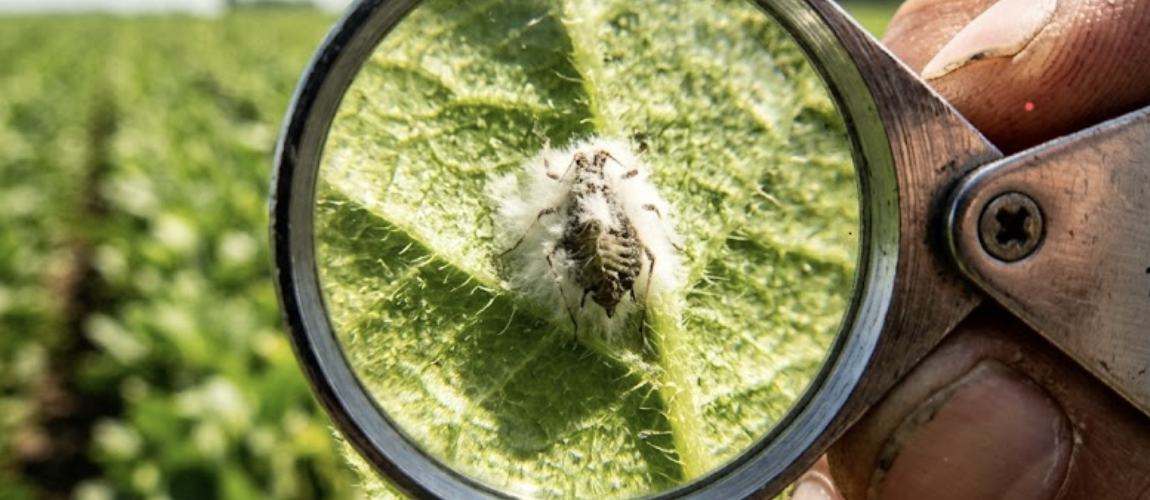
- The Fungal Invasion: Entomopathogenic fungi, like Beauveria bassiana, don’t need to be eaten. When you spray these spores, they land on the insect’s shell, germinate, and literally drill through the exoskeleton. The fungus then grows inside the bug, consuming its internal organs until it erupts out the other side in a fuzzy white mass. It is slow, but it bypasses chemical resistance entirely.
- The Gut Bomb: Bacterial controls, specifically Bacillus thuringiensis (Bt), are useless if they just sit on the leaf. The pest, usually a caterpillar, has to eat it. Once swallowed, the alkaline juice in the caterpillar’s stomach dissolves the bacteria, releasing a crystal protein that violently shreds the stomach lining. The insect stops eating in hours and slowly starves to death.
- The Viral Hijack: Baculoviruses are the ultimate precision weapon. You spray them, a specific caterpillar eats them, and the virus takes over the insect’s cells, turning it into a virus-replicating factory. The caterpillar eventually liquefies, dripping millions of new viral particles onto the leaves below to infect the next generation.
How do microbial biopesticides kill insects?
Microbial biopesticides kill insects through targeted physical infection or toxic ingestion, rather than broad-spectrum nervous system disruption. For instance, when an insect is targeted by a fungal biopesticide, the microscopic spores physically attach to the bug’s outer armor. Given enough humidity, the spore germinates, secretes enzymes to melt a hole in the shell, and physically grows mycelium throughout the insect’s body cavity. The pest is literally eaten alive from the inside out over the course of three to seven days, a physical process that no genetic chemical resistance can prevent.

Real-World Survival: Breaking the Thrips Cycle
Theory is cheap; what matters is what happens when money is on the line. Let’s look at a massive commercial strawberry operation in California. They were getting absolutely hammered by Western Flower Thrips. They had sprayed spinosad until the thrips were basically drinking it for breakfast. The resistance was absolute, and the crop was facing total economic downgrade.
The crop consultants didn’t panic and clear-cut the field. Instead, they leaned hard into a biopesticides integrated crop management program. They introduced Beauveria bassiana right into the middle of their spray rotation. Because this fungus kills via physical infection, it didn’t matter that the thrips were immune to spinosad. According to field reports reviewed by global organizations like CABI, the fungal spores ripped through the thrips population regardless of their chemical genetics.
The results were undeniable. Not only did the thrips population crash, but because the fungus didn’t wipe out the beneficial predatory mites in the field, the natural ecosystem took over the cleanup duty. The grower slashed their synthetic chemical bill, broke the resistance cycle, and easily passed the incredibly strict export residue testing required for their European buyers.
Q&A Deep Dive: The Agronomist’s Biological Playbook
A: The main benefits of biopesticides in commercial farming are resetting chemical resistance, eliminating harvest delays caused by toxic residue, and preserving the beneficial insects that do free work for you. Because biopesticides use complex, physical modes of action—like fungal infection or gut disruption—pests rarely develop immunity to them. Furthermore, because they degrade naturally and safely, you can often spray them the exact same day you send a crew in to harvest, keeping your operation moving without regulatory bottlenecks.
A: Yes, you can mix biopesticides and synthetic chemicals, but you have to treat the process like a chemistry experiment, not a cocktail. Botanical extracts are usually tough enough to mix with anything, but if you toss living bacterial spores or fungal mycelium into a tank heavily loaded with broad-spectrum synthetic fungicides or highly acidic foliar fertilizers, you will instantly kill the biologicals. You must verify compatibility with the manufacturer and always run a small jar test before ruining a thousand-gallon batch.
A: The difference is that microbial biopesticides are living organisms, while botanical biopesticides are dead chemical extracts. Botanicals, like neem oil or chrysanthemum extract, work like traditional contact poisons or repellents; they hit the bug and cause an immediate chemical reaction. Microbials, however, are living bacteria, fungi, or viruses that have to be applied carefully so they can actively infect, colonize, or be eaten by the target pest over several days.
A: Growers usually fail with biological pest control because they wait too long to spray and treat the product like a synthetic rescue chemical. If you wait until the crop is completely infested and heavily damaged, a slow-acting biological will never catch up to the pest reproduction rate. Biopesticides must be applied preventatively, early in the pest’s life cycle, and handled with extreme care to protect the living organisms from intense UV light and heat during application.
A Gritty How-To: Executing a Biological Spray Program
You can’t just dump biology into a tank and hope for the best. Transitioning a conventional field to a biological system requires discipline. If you wing it, you will burn cash. Follow this exact workflow to make it stick.
- First, scout aggressively and early. You have to know your enemy’s exact life stage. Biologicals are usually highly specific; a Bt spray will wreck a small caterpillar but do absolutely nothing to a mature adult moth.
- Next, prep your tank water. Living things hate bad water. Before you add the product, check your pH. If your water is heavily chlorinated municipal water, let it sit and off-gas, or use a neutralizer, so you don’t bleach your expensive microbes to death.
- Then, adjust your sprayer pressure. You aren’t spraying inert chemicals; you are shooting living spores through a tiny metal nozzle. If you crank your pressure up to 100 PSI to get a finer mist, the sheer mechanical force can shatter fungal spores, spraying dead soup onto your crop.
- After that, spray in the dark (mostly). The sun is a biological killer. UV radiation will fry fungal spores and viruses in minutes. Always plan your applications for late afternoon, early evening, or overcast days to give the microbes 12 hours of darkness to germinate and infect.
- Finally, judge success differently. Don’t walk the field the next morning looking for dead bugs on the ground. Check the leaves. If the caterpillars are still there but look sluggish, have stopped eating, or are turning weird colors, the biological is working perfectly.
Managing pesticide resistance with biologicals
The smartest way to manage pesticide resistance with biologicals is to use them as a “circuit breaker” in your standard chemical rotation. Don’t throw out your synthetics; alternate them. Hit the first generation of pests with a conventional nerve agent. When the survivors—the ones with natural chemical resistance—breed, hit their offspring with a biological gut disruptor. By constantly changing the weapon from chemical to biological, you prevent the pest population from ever locking in a genetic defense. If you want to build these complex, multi-action spray programs, the advanced modules inside BAW Academy will show you exactly how the pros do it.

Essential Regulatory and Industry Resources
Navigating the rules around biologicals can be a massive headache. You need rock-solid sources to ensure what you are spraying is both legal and effective.
- EPA Biopesticide Regulatory Division: In the US, the EPA handles biopesticides differently than synthetics. Their database at epa.gov is critical for understanding what is legally classified as a biochemical versus a microbial, which dictates how you handle it.
- The International Biocontrol Manufacturers Association (IBMA): If you want to know where the industry is heading globally, the IBMA is the authority. They push the standards that separate high-quality, viable biological products from cheap, dead knockoffs. Explore their parameters at ibma-global.org.
- The Food and Agriculture Organization (FAO): For a global perspective on pest management, the FAO tracks how integrated systems are physically impacting broad-scale agriculture and food security. Review their documentation at fao.org.
- PubMed Central: When you need the raw, unfiltered science, searching PubMed for specific microbial interactions will give you the peer-reviewed reality behind the sales pitch.
Common Mistakes That Will Cost You Money
The bio-ag space is full of slick marketing. If you fall for the hype without understanding the agronomy, you will get burned. Let’s clear up the nonsense.
| Myth | Correction |
|---|---|
| “It’s all-natural, so I don’t need to wear PPE.” | Correction: This is how you end up in the emergency room. Fungal spores might be natural, but inhaling millions of them will cause severe respiratory distress. Botanical extracts can cause brutal allergic skin reactions. Read the label; “natural” does not mean harmless to humans. |
| “I can just leave the jug in the back of the truck.” | Correction: Microbial biopesticides are living things. If you leave a jug of Beauveria in the bed of your pickup during a 100-degree afternoon, you will bake the fungi to death. Many of these products require cool, dark storage, and some even need refrigeration to remain viable. |
| “Biologicals are a silver bullet for bad farming.” | Correction: No bug-killing fungus is going to save a crop planted in compacted soil, choked by weeds, and starved of water. Biopesticides integrated crop management is the roof of the house; basic, solid agronomy is the foundation. If the foundation is rotting, the roof will still cave in. |
Frequently Asked Questions
What are the main challenges of using biopesticides in agriculture?
The biggest hurdles are the short shelf life of living products, the absolute necessity for precise timing based on the pest’s life cycle, and their vulnerability to harsh weather. You have to be a much better, more observant agronomist to use biologicals successfully compared to just spraying a broad-spectrum chemical.
How do you measure the efficacy of a biological pest control application?
You measure success by the reduction of crop damage, not the immediate body count. A successful biological spray means the pest stops feeding within 24 hours, even if it takes them four more days to actually die and fall off the leaf. If the leaf damage stops, the product worked.
Can viral biopesticides harm humans or my farm dogs?
Absolutely not. Agricultural viruses, like Baculoviruses, are incredibly specialized. They only possess the biological “keys” to unlock the cells of very specific target insects. They cannot infect mammalian cells, meaning they pose zero threat to humans, livestock, pets, or even beneficial insects like honeybees.
Are biopesticides approved for use in certified organic farming?
The vast majority of microbial and botanical biopesticides are the backbone of certified organic pest control. However, you must always double-check that the specific commercial formulation you buy doesn’t contain prohibited synthetic inert ingredients, usually verified by looking for an OMRI (Organic Materials Review Institute) seal.
Conclusion
The transition away from relying solely on heavy synthetic chemistry isn’t some idealistic fantasy; it is the gritty, necessary evolution of commercial farming. By fully embracing biopesticides integrated crop management, we can outsmart the pests that are currently shrugging off our best chemicals. The science is proven, and the field results are undeniable: these living tools extend the life of our chemistries, save beneficial insects, and keep harvest schedules on track.
It requires more brainpower, better scouting, and a willingness to learn new mechanics, but breaking the cycle of chemical resistance is the only way to protect your bottom line in the long run. If you are tired of watching your spray program fail and are ready to actually learn how to wield these biological tools in the dirt, BAW Academy’s Biopesticides in Integrated Crop Management 101 was built to give you the exact playbook.
Deploy Biologicals with Scientific Precision
Get the exact operational playbook to deploy living biological assets in the dirt and successfully break pesticide resistance cycles.
Access Biopesticides 101